Much of what is lost in a traditional bibliography is the physicality of the book. In this physical representation of the bibliography, each face of the cube represents an aspect of the traditional bibliography.
The concept of a photo cube is simple: it’s a normal six-sided cube, with each face of the cube featuring a different photograph. I have one on my desk. Each side of the cube represents a part of my life: there’s a picture of me with my mom; with my dad; with friends at prom; playing baseball; as a young kid; and with my high school cross-country team.
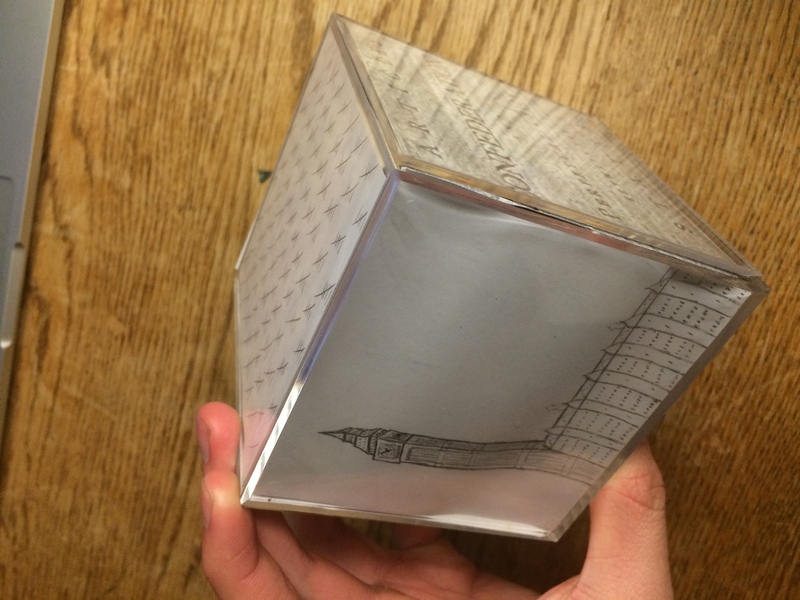
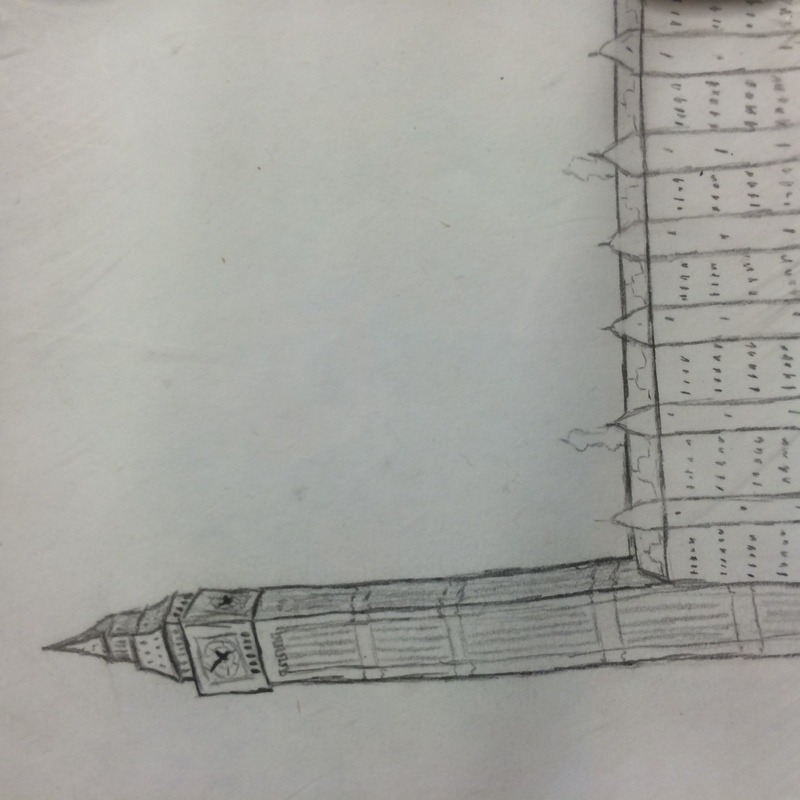
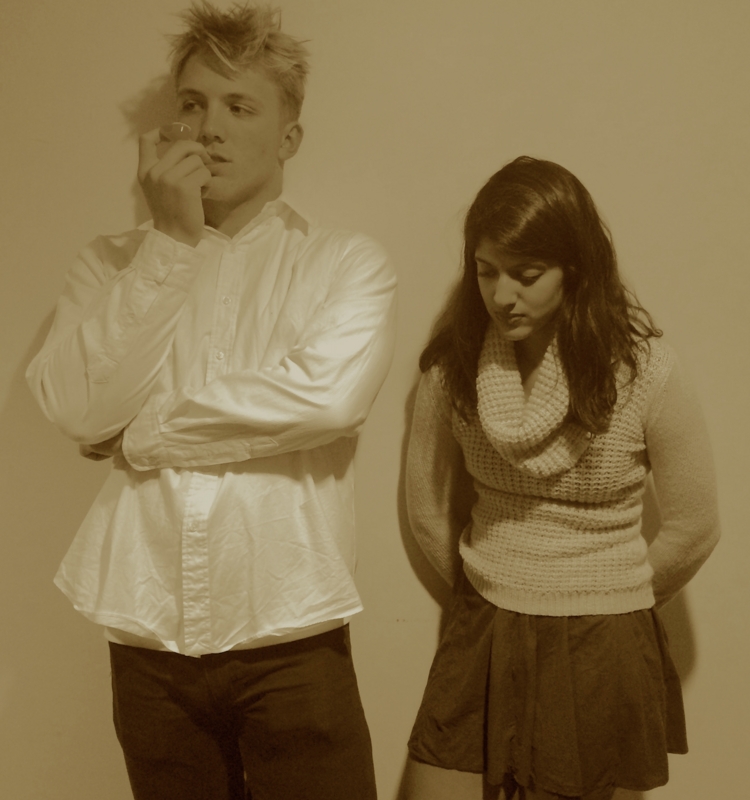
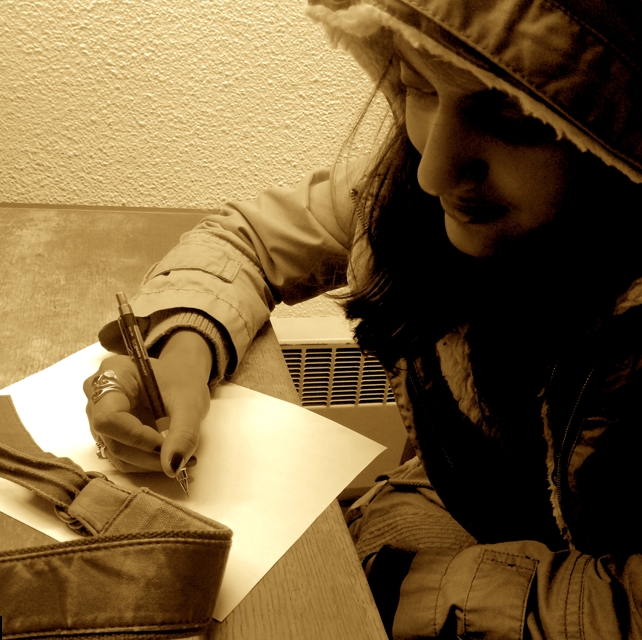
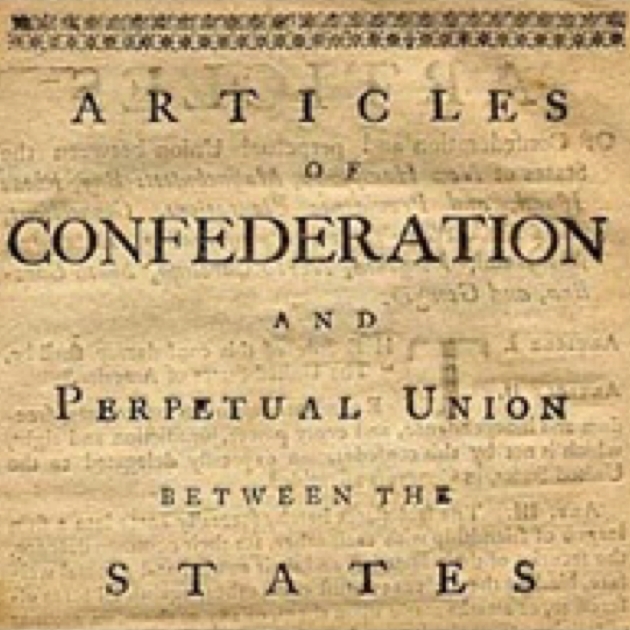
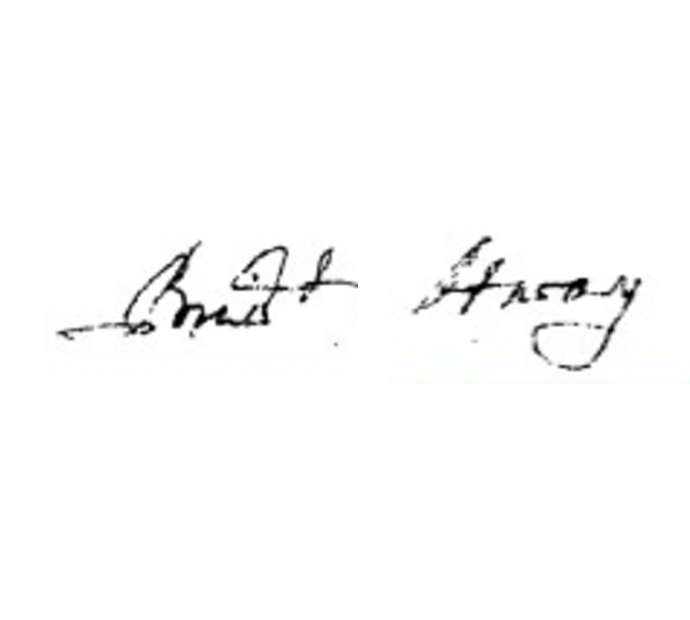
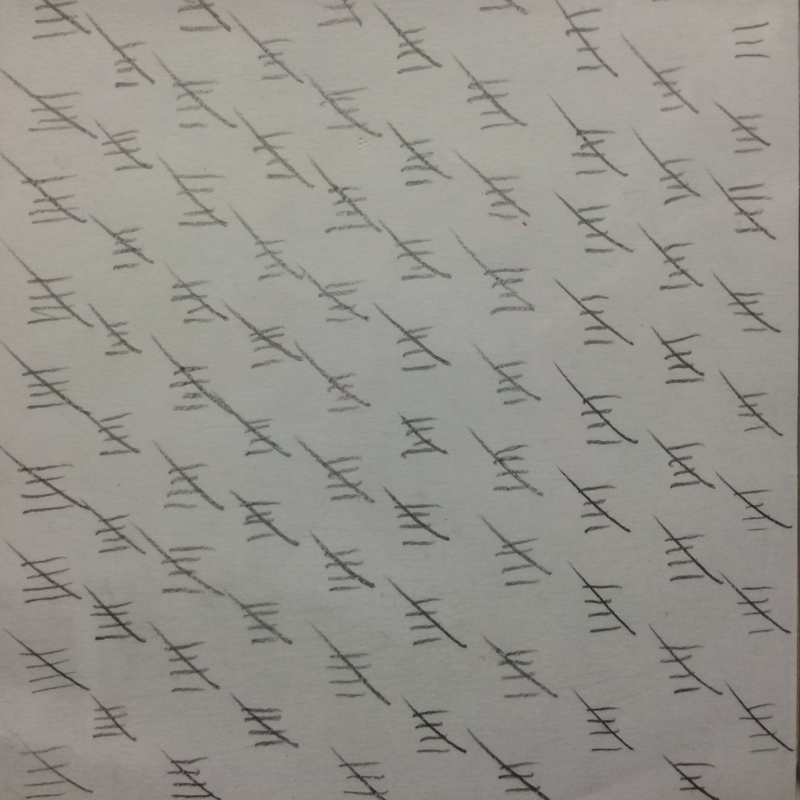
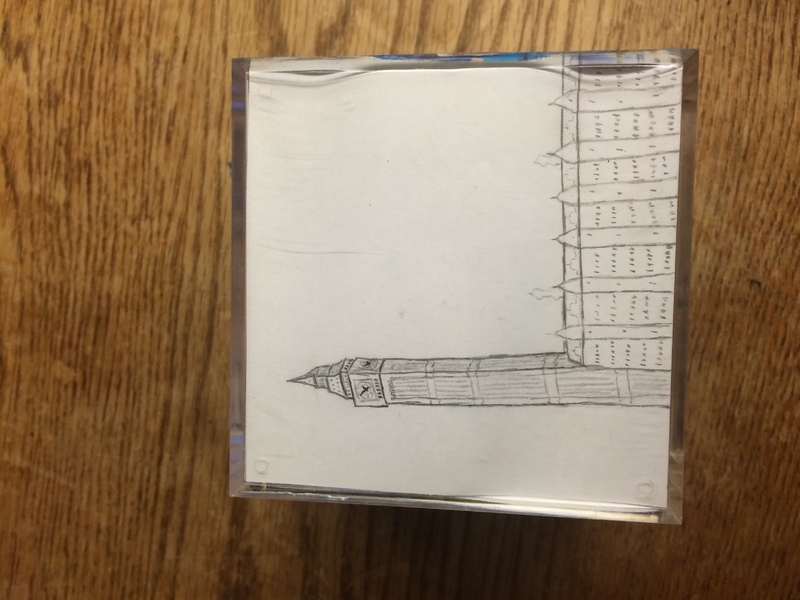
It is no different for a novel: each face of the cube represents an aspect of the traditional bibliography. The title (“The unfortunate union”) is recreated in a photograph of an unhappy couple; the author (“a lady”) by a photograph of a woman writing; the city of publication (London) by a drawing of Big Ben; the number of pages (423) by 423 tally marks; the year (1778) by the Articles of Confederation (South Carolina became the first state to ratify the Articles in 1778); and the illegible marks on the title page by themselves.
Ostensibly, this gives all the same information as a traditional bibliography. There are no new details added, and, just as in the traditional bibliography, all the information can be gathered without reading the novel. But it presents the information in a very different way. Much of what is lost in a traditional bibliography is the physicality of the book. Information represented in letters and numbers rather than visually is not, in my opinion, as satisfying. This project attempts to restore the lost physicality. The tally marks are an excellent example. Four hundred and twenty-three pages doesn’t mean all that much out of context. Four hundred and twenty-three tally marks serves as a substitution for the thickness of the book while maintaining the powerful visuals of such a large number.
This also allows the viewer to consider each aspect individually. Whereas in a traditional bibliography all the information is in front of you, the necessity of looking at one side at a time is inherent in the cube. The hope is that this allows a viewer to separate out information and think more deliberately about the information being delivered in the bibliography.
Much of what is lost in a traditional bibliography is the physicality of the book. In this physical representation of the bibliography, each face of the cube represents an aspect of the traditional bibliography.
It is no different for a novel: each face of the cube represents an aspect of the traditional bibliography. The title (“The unfortunate union”) is recreated in a photograph of an unhappy couple; the author (“a lady”) by a photograph of a woman writing; the city of publication (London) by a drawing of Big Ben; the number of pages (423) by 423 tally marks; the year (1778) by the Articles of Confederation (South Carolina became the first state to ratify the Articles in 1778); and the illegible marks on the title page by themselves.
Ostensibly, this gives all the same information as a traditional bibliography. There are no new details added, and, just as in the traditional bibliography, all the information can be gathered without reading the novel. But it presents the information in a very different way. Much of what is lost in a traditional bibliography is the physicality of the book. Information represented in letters and numbers rather than visually is not, in my opinion, as satisfying. This project attempts to restore the lost physicality. The tally marks are an excellent example. Four hundred and twenty-three pages doesn’t mean all that much out of context. Four hundred and twenty-three tally marks serves as a substitution for the thickness of the book while maintaining the powerful visuals of such a large number.
This also allows the viewer to consider each aspect individually. Whereas in a traditional bibliography all the information is in front of you, the necessity of looking at one side at a time is inherent in the cube. The hope is that this allows a viewer to separate out information and think more deliberately about the information being delivered in the bibliography.